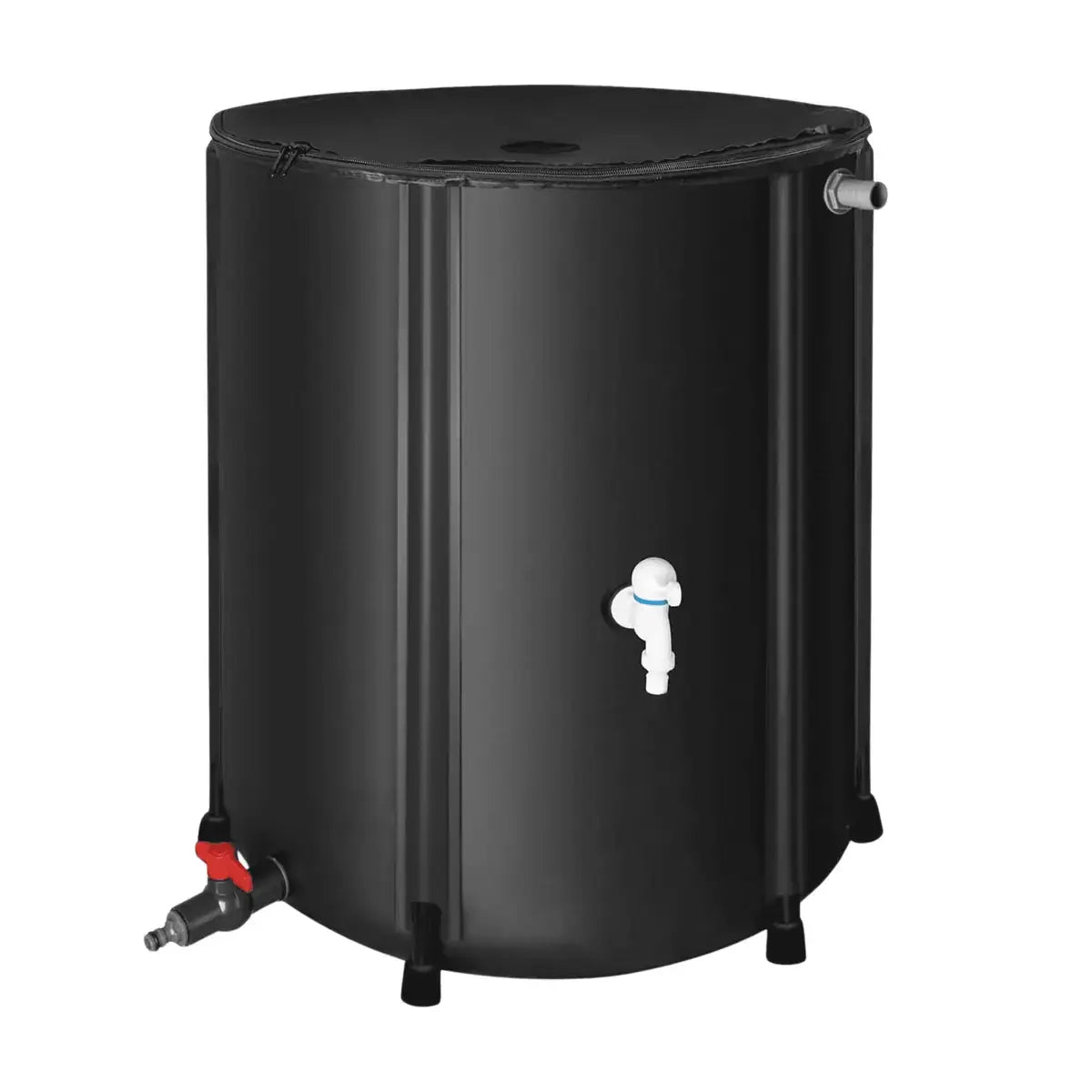
Collapsible 53 Gallon Foam Barrel
Couldn't load pickup availability
1-Year Warranty Included
Same-Day Shipping (Order by 12PM EST)
Expert Support: Call (866) 577-8743
Shipping information
Shipping information
Warranty information
Warranty information
The Collapsible 53 Gallon Foam Barrel is a direct 1:1 replacement for the standard rigid 53-gallon barrel used with every SurgeFX foam machine. Same capacity. Same function. Same mixing process. The difference is what happens after the event: instead of wrestling a full-size rigid barrel back into your vehicle, the collapsible barrel breaks down flat — frame folds, bladder compresses — and slides into the gaps between your other gear. For mobile operators loading and unloading foam equipment every weekend, this solves the single most annoying logistics problem in the foam business.
The design uses a flexible bladder supported by a collapsible frame. When erected, the frame holds the bladder open at full 53-gallon capacity. Fill it with water, add your foam solution, run your machine — it performs identically to a rigid barrel. When you're done, drain the barrel, collapse the frame, and the entire unit packs down to a fraction of its erected size. No permanent bulk. No dead space in the truck. No strapping a rigid barrel to the roof or leaving it at the venue because it won't fit.
Who Needs a Collapsible Barrel?
- Mobile Foam Operators — If you load and unload your foam rig every weekend, the barrel is the bulkiest piece of equipment in your vehicle. A rigid 53-gallon barrel takes up the same space whether it's full of water or completely empty. The collapsible barrel eliminates that dead space on the return trip. Pack it flat alongside your foam machine, hoses, and other gear. Reclaim the truck space that a rigid barrel permanently occupies.
- Small Vehicle Operators — Running foam events from an SUV, minivan, or compact truck instead of a full cargo van? Space is at a premium. The collapsible barrel is the difference between fitting your complete foam setup or making a second trip. It expands to full 53-gallon capacity on site and compresses flat for the ride home.
- Rental Companies — Shipping or delivering foam machine packages to clients is simpler when the barrel collapses. It fits in smaller boxes, stacks more efficiently in delivery vehicles, and clients can store it between pickup without dedicating permanent space to an empty rigid barrel. For operations that dispatch multiple foam kits per weekend, the space savings multiply across every unit.
- Multi-Machine Setups — Running two or three foam machines at one event? That's two or three barrels. Rigid barrels dominate your cargo space. Collapsible barrels stack flat between machines, hoses, and power cables. The math changes dramatically when you're loading multiples.
- Storage-Constrained Operations — Garage-based operators, apartment storage units, shared warehouse space — anywhere square footage is limited, a collapsible barrel earns its value between events. It stores on a shelf, in a closet, or flat against a wall instead of occupying permanent floor space as a rigid barrel does.
- Fly-In / Destination Events — Traveling to a remote venue and shipping your foam rig? A rigid barrel is a freight headache. The collapsible barrel ships in a standard box, checks as luggage-adjacent cargo, and opens to full capacity on arrival. This is the only practical barrel option for operators who fly to gigs.
Specifications
What Goes in the Barrel
Everything that goes in a standard rigid barrel goes in this one. Fill with water, add your foam solution of choice, drop in the foam machine's intake hose, and run. The collapsible barrel is a container — the mixing and operation process is identical regardless of barrel type.
For solution mixing ratios and instructions, refer to your specific foam solution's product page: Ready to Run (pour and go), Foam Gel Concentrate (75:1 ratio after 24-hour breakdown), Scented Gel (same as Gel Concentrate), Foam Powder (mix into warm water), or Pour & Go Packs (pre-measured single barrel dose).
Setting Up the Barrel
Step 1: Unfold the Frame
Remove the collapsed barrel from your vehicle or storage. Open and lock the collapsible frame into its fully erected position. The frame provides the rigid structure that holds the bladder open and upright. Make sure all frame sections are locked securely — the frame needs to support 53 gallons of water (approximately 440 lbs when full).
Step 2: Position the Bladder
With the frame erect, the flexible bladder should be seated inside the frame, open at the top. Smooth out any folds or bunching in the bladder walls so the full interior volume is available. The bladder is the waterproof container — the frame is the structural support.
Step 3: Fill with Water & Add Solution
Fill the barrel with water using a garden hose, and add your foam solution per the solution's mixing instructions. Place the foam machine's intake hose into the barrel. From this point forward, operation is identical to a rigid barrel — the collapsible barrel is simply the container holding your solution.
Step 4: Position on Level Ground
Place the barrel on a flat, level surface. Unlike a rigid barrel that maintains its shape regardless of terrain, the collapsible barrel relies on its frame for structure. Uneven ground can cause the frame to lean or the bladder to shift. A flat surface — concrete, pavement, plywood, a flat section of grass — ensures the barrel stands stable and upright under the weight of 53 gallons of water.
Breaking Down After the Event
Step 1: Drain Completely
Drain all remaining water and solution from the bladder. Tilt and pour, use a siphon, or let gravity drain through the bottom if your bladder has a drain port. The barrel must be fully empty before collapsing — you cannot fold it with water inside.
Step 2: Rinse the Bladder
Give the bladder a quick rinse with clean water, especially if you used color additive, UV powder, or scented gel. Rinsing prevents residue buildup between events and keeps the bladder in good condition for the next use. A quick hose-down takes 30 seconds and extends the bladder's lifespan.
Step 3: Collapse the Frame
Unlock and fold the frame down. Press the bladder flat — squeeze out excess air. The entire unit compresses to a fraction of its erected size. Secure with included straps or bands if available, or roll/fold for compact storage.
Step 4: Load
Slide the collapsed barrel into your vehicle alongside your foam machine and other gear. It fits in gaps that a rigid barrel can't — between equipment cases, under seats, in the spaces around your other gear. This is the whole point.
Rigid Barrel vs. Collapsible Barrel
Both hold 53 gallons. Both work identically with every SurgeFX foam machine and solution. The choice comes down to how you transport and store your gear.
When Rigid Is Still the Right Choice
If your barrel lives at a permanent venue, sits in a warehouse, or never leaves the same location — a rigid barrel is simpler. No setup, no breakdown, no care required for a flexible bladder. Rigid barrels also handle rough terrain and careless handling better. If you're not transporting the barrel regularly, rigid is lower-maintenance and more forgiving.
When Collapsible Wins
If the barrel goes in a vehicle after every event, if you're running foam from a car or SUV, if you need multiple barrels and can't sacrifice the cargo space, if you store gear in a small space between events, or if you ever ship your foam rig to a destination event — the collapsible barrel solves a problem that rigid barrels physically cannot.
Frequently Asked Questions
Is it really the same as a regular barrel?
In function, yes — 53-gallon capacity, compatible with all SurgeFX foam machines and solutions. You fill it with water, add solution, drop in the intake hose, and run your machine exactly as you would with a rigid barrel. The only differences are the construction (flexible bladder + collapsible frame instead of rigid plastic) and the ability to collapse flat for transport.
How small does it get when collapsed?
Dramatically smaller than the erected barrel. The frame folds down and the flexible bladder compresses flat. The exact collapsed dimensions depend on how tightly you fold it, but the point is that it fits in spaces a rigid barrel never could — between equipment, in the back seat, in a truck bed alongside other gear.
Can I use foam color additive or UV powder in it?
Yes. All SurgeFX solutions work in the collapsible barrel including Foam Color Additive and UV Glow Powder. Rinse the bladder after events where you use colorant or UV powder to prevent residue buildup. A quick hose-down after draining takes care of this.
Will the bladder leak or puncture?
The bladder is designed to hold 53 gallons of water reliably. Treat it with the same care you'd give any flexible waterproof container: avoid placing it on sharp objects, rocks, broken glass, or rough abrasive surfaces. Set it up on flat, clean ground. Don't drag it across pavement when full. With normal care on typical event surfaces — concrete, pavement, grass, gym floors, pool decks — the bladder holds up well.
Can I leave water in it overnight?
For multi-day events, yes — the barrel can hold water overnight while erected. But don't leave the barrel full and unattended on slopes or unstable surfaces, and don't collapse the barrel with water still inside. For single-day events, drain after use and collapse for transport.
How long does setup take?
Approximately 1–2 minutes to unfold the frame, lock it in position, and position the bladder. After that, fill with water and add solution — same as any barrel. Breakdown takes a similar amount of time: drain, rinse, collapse, pack. The total time investment is minor compared to the transport space you save.
Does it work on grass?
Yes, as long as the ground is relatively flat and level. Grass is fine — it's actually gentler on the bladder than concrete or asphalt. The key factor is levelness: the frame relies on even ground to stay stable under the weight of 53 gallons of water. If the grass has a noticeable slope, place a piece of plywood or a flat board under the barrel to create a level platform.
Can I use this with the Black Box Injection Blending System?
Yes. The Black Box injects concentrate directly into the water barrel during operation. The collapsible barrel functions identically to a rigid barrel from the Black Box's perspective — it's just a container of water that the Black Box injects into. Same setup, same operation.
Is it worth it if I have a cargo van?
If you have dedicated space in a cargo van and the barrel never needs to share space with other equipment, a rigid barrel is simpler. The collapsible barrel's value increases in direct proportion to how tight your vehicle space is. Small SUV? High value. Cargo van with dedicated barrel space? Lower value — unless you're running multiple barrels and need the space savings to scale.
How do I clean it?
Rinse with clean water after every use. For deeper cleaning — after colored foam, UV powder, or if the bladder has been sitting with residue — fill partially with clean water, agitate, and drain. Let the bladder air dry when possible before collapsing for storage. Avoid harsh chemicals or abrasive scrubbing that could damage the bladder material.
Get the Most from the Collapsible Barrel
Carry a Ground Sheet
A simple tarp, piece of plywood, or rubber mat placed under the barrel protects the bladder from rough surfaces and creates a clean, level platform. This takes 10 seconds to lay down and eliminates the two most common concerns: puncture risk from rough ground and instability from uneven terrain. Keep a folded tarp with your foam gear at all times.
Rinse Before Collapsing — Every Time
Foam solution residue left in the bladder between events gets sticky, promotes mildew, and can eventually degrade the bladder material. A 30-second rinse with clean water after draining prevents all of this. Make it part of your teardown routine: drain, rinse, collapse. The bladder stays clean and lasts longer.
Air Dry When Possible
If you have time during teardown, leave the bladder open for a few minutes to air dry before collapsing. Folding a wet bladder and leaving it packed in a vehicle creates a damp, enclosed environment that promotes mildew. Even 10 minutes of air exposure helps. If you can't dry on-site, unfold and air out the bladder when you get back to your shop or storage area.
Fill the Barrel Before Moving It
Erect the frame and position the barrel in its final operating location before filling with water. 53 gallons of water weighs approximately 440 lbs — you're not moving the barrel once it's full. This is true of rigid barrels too, but it's especially important with the collapsible barrel because dragging a full flexible bladder can stress the frame and risk bladder damage.
Keep a Spare Bladder
If the collapsible barrel becomes your primary barrel for weekly events, consider having a backup bladder available. A puncture or tear mid-event can't be fixed on-site. A spare bladder takes almost no storage space when folded and turns a potential event-ending problem into a 5-minute swap.
Use It as Your Second (or Third) Barrel
Even if you run a rigid barrel as your primary, the collapsible barrel is an excellent second barrel. Keep it in the vehicle for overflow events, double-machine setups, or emergency backup when a rigid barrel cracks or gets left behind. It takes up virtually no space until you need it — and when you need it, you really need it.
Multi-Machine Math
Two foam machines = two barrels. Three machines = three barrels. With rigid barrels, the cargo math falls apart fast — you're out of vehicle space before you're out of machines. Collapsible barrels change the scaling equation entirely. Three collapsible barrels pack into the space of one rigid barrel during transport. If you're growing your foam fleet, collapsible barrels are how you scale without upsizing your vehicle.
Label Your Barrels
If you run multiple barrels with different solutions — one with Ready to Run, one with Gel Concentrate, one with Scented Gel — label the frames with tape or a marker so you don't mix up which barrel had which solution. This is especially helpful with scented solutions, where residual fragrance in the bladder can carry over to the next event if not rinsed thoroughly.
✦ Perfect For
- Mobile Operators — Collapses flat after every event. Reclaim truck space.
- Small Vehicles — Fits foam rigs into SUVs, minivans, compact trucks.
- Rental Companies — Ships smaller. Clients store easier between pickup.
- Multi-Machine Setups — 3 collapsible barrels pack into space of 1 rigid barrel.
- Storage-Constrained — Stores on shelf or flat against wall. No permanent floor space.
- Travel / Fly-In Events — Ships in standard box. Only practical barrel for shipped rigs.
📋 Specs
Capacity: 53 gallons (identical to standard rigid barrel)
Design: Flexible bladder in collapsible frame
Erected: Full 53-gallon barrel dimensions
Collapsed: Folds flat for transport and storage
Machines: All SurgeFX foam machines (Maxx, Pro-X, any 53-gal barrel machine)
Solutions: All — Ready to Run, Gel Concentrate, Scented Gel, Powder, Color, UV Glow
Also works with: Black Box Injection Blending System
🔧 Setup & Breakdown
Setup (~1–2 min):
1. Unfold and lock frame in final position
2. Seat bladder inside frame, smooth walls
3. Fill with water, add foam solution
4. Drop in intake hose — run as normal
Breakdown (~2 min):
1. Drain completely
2. Rinse bladder with clean water
3. Collapse frame, press bladder flat
4. Pack into vehicle — fits in gaps between other gear
🔄 Rigid vs. Collapsible
Same: 53-gallon capacity · all machines · all solutions
Rigid: Zero setup · handles rough use · permanent footprint · best for fixed locations
Collapsible: Folds flat · minimal storage · 1–2 min setup · best for mobile operators
Bottom line: Rigid for permanent setups. Collapsible for anything that moves.
❓ FAQ
Same as regular barrel? In function, yes. Same capacity, same machines, same solutions.
How small collapsed? Fraction of full size. Fits in gaps rigid barrel never could.
Color/UV safe? Yes. Rinse after colored or UV events.
Puncture risk? Normal care on clean, flat surfaces. Avoid sharp objects.
Overnight? Yes when erected. Don't collapse with water inside.
Setup time? ~1–2 minutes. Breakdown similar.
Works on grass? Yes — flat and level ground. Use plywood on slopes.
Black Box compatible? Yes — same barrel function.
Cleaning? Rinse after every use. Air dry when possible before storing.
💡 Pro Tips
Carry a ground sheet — Tarp or plywood under barrel. Protects bladder, levels surface.
Rinse every time — 30-second rinse prevents residue buildup and mildew.
Air dry when possible — Even 10 minutes before collapsing helps prevent mildew.
Fill in place — 53 gallons = ~440 lbs. Don't move it full.
Keep a spare bladder — Puncture insurance. Takes no space when folded.
Great as your second barrel — Zero-footprint backup for overflow or double setups.
Multi-machine scaling — 3 collapsible = space of 1 rigid during transport.